Showing posts with label Suella Braverman. Show all posts

Friday, 9 October 2026

National identity cannot be imposed


Once upon a time, the statement ‘all swans are white’ would have been regarded in these islands as an inalienable truth – being white was part of the definition of the species. Then some black ones were discovered in Australia. At that point, there were only two possibilities – either the new birds weren’t swans, or else the definition of a ‘swan’ was wrong. Sensibly, humanity settled on the second option. With hindsight it was obvious – but changing a definition in the face of a deep-held belief isn’t always as straightforward as that.

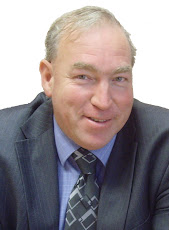
A week or so ago, Tory/Reform politician Suella Braverman declared that she isn’t and cannot be English. She got a lot of criticism in response, but based on her own definition of Englishness, it’s impossible to argue with her. It’s her definition that is dubious, not the conclusion which she draws from it, and her position underlines the difficulty people sometimes have in changing a definition which is deeply-believed. She has struggled – or more accurately, refused – to set out more precisely what her definition actually is, but it seems to be that she regards Englishness as an ethnicity into which one has to be born, whereas Britishness is a ‘mere’ nationality, a matter of legality rather than identity.

Her definition is problematic, and not just for those of a darker hue. Whilst it might be more ‘obvious’ that some people have non-English ethnicity somewhere in their family history, it has a wider effect than that. On her definition, someone born to a Welsh mother and an English father (such as myself, to select a random example) can never be either English or Welsh: they can only be British. Under that definition, I am left wondering just how many people she would really consider to be English (or Welsh, or Scottish) at all, no matter how much their outward appearance might match the ‘norm’ suggested by that definition.

How she defines herself is a matter for her, and I really don’t care. The problem arises not with how someone defines him or herself, but when they try to apply that definition to others. It’s a problem which I’ve encountered many times in ‘nationalist’ circles, and is part of the reason that I prefer the term ‘independentista’. There are those who insist that British is not a nationality at all, or that, if it is, one cannot be both British and Welsh at the same time, and must choose between them. But an objective definition is hard to find. History, language, culture, birthplace, ancestry might all be elements, but ultimately, national identity is a highly subjective concept. It’s possible for someone to identify as Welsh and wish to maintain the United Kingdom, and it’s possible (albeit less likely) for someone to identify as British and wish for Welsh independence.

There is little point in arguing with Braverman over her own self-identity – it’s not a winnable argument in any event. There is every reason to reject – and forcibly – any attempt to impose an identity on others. And I have little doubt that raising it in the way she did was an attempt to do precisely that.

Tuesday, 27 February 2024

Hair-splitting is just a diversionary tactic


Maybe there’s a scholar of English nuance somewhere who can explain the enormous difference between claiming that Sadiq Khan and, in consequence, London are under the control of Islamists (© Lee Anderson) and claiming that the whole of the UK is under the control of Islamists and Keir Starmer is in hock to them (© Suella Braverman). The first is apparently so serious as to justify removing the whip, whilst the second can be ignored. Number 10 have been struggling for days to explain what exactly it was about Anderson’s statement which led to his suspension (and today’s ‘clarification’ has added little to the sum total of human knowledge), suggesting that Sunak really doesn’t understand what was wrong with both wild claims, and has merely responded to bad press.

Some, such as the Trade and Industry Secretary, have decided to try and avoid the question by getting into a semantic argument about what is or is not Islamophobia. If it weren’t for the fact that this is a blatant attempt by the hair-splitting tendency to divert attention away from the substance, she might even have half a point. ‘Phobia’ isn’t the best suffix to use, given its suggestion of fear, and ‘anti-Islamic’ might indeed be more accurate use of language. It is possible to hate something without fearing it, and to fear something without hating it, but arguing about that nuance doesn’t actually deal with the essence of the comments, which seem to display a mixture of both hate and fear.

Essentially, what both Braverman and Anderson are complaining about is that people have been ‘allowed’ to demonstrate against Israeli actions in Gaza rather than having their protests banned and the ringleaders rounded up and jailed. And whilst the subject matter in this case might be the appalling violence being deployed in Gaza, both of them are using what they assume (maybe correctly, although I’m not entirely convinced that they are really in tune with even that group) to be an unpopular cause amongst their target voters as a hook to express their dislike of any dissent from their own view of the world. And it’s not at all unreasonable to wonder whether Sunak’s half-hearted disciplinary action against one of them (make an unapologetic apology with your fingers crossed behind your back and we’ll let you back in, seems to be the message) and his reluctance to even consider action against the second is a result of him basically agreeing with them and not really understanding what the fuss is about.

If any of them understood what the traditional ‘British values’ which they all claim to espouse mean, they would also understand that the right to protest is one of those values. What their words and actions demonstrate most clearly – and not just in relation to Gaza – is that they are actually clueless about those values. It increasingly appears as though the only ‘right’ that they think anyone other than themselves and the financial interests they represent should have is the right to do as we are told. And that isn’t really a ‘right’ at all.

Thursday, 8 February 2024

Pressing the self-destruct button?


There was a story back in the 1960s about a CofE vicar preparing the service for the Sunday after an election before he knew the result. In something of a quandary about which hymn to sing, he eventually settled on three alternatives, so that he covered all bases. If the Tories won, the congregation would sign “Now thank we all our God”, substituted by “Oh Lord our help in ages past” in the event of a Labour victory. Just in case the Liberal Party (as they called themselves back then) were to win, the fall-back option would be “The Lord moves in a mysterious way”.

The CofE was then – and still is in some circles even today – regarded as being ‘the Tory Party at prayer’, and the old joke plays on that view. It’s an association which some in the Tory Party seem determined to end once and for all, with bishops and archbishops now added to the list of dangerous enemies of the people, along with judges, lawyers, the BBC, the Civil Service, foreigners in general and the EU in particular. Liz Truss and Sirjake seem to have added quite a few more enemies of the people to the list at their little jamboree a couple of days ago. The ‘crime’ being committed by clerics in this case is to actively welcome converts from other religions, and Islam in particular. Some may have laboured under the delusion that proselytizing is a core activity for any religion, but it seems that the CofE has been converting the wrong people, at least as far as Braverman and Patel are concerned. For truly traditional English conservatives, the job of the English state religion is to support the establishment, and especially the Tories, not to go off and recruit people who are ‘not quite like us’. The bishops are, apparently, not looking deeply enough into the souls of the new converts to establish the degree to which the conversion is genuine.

There is half a valid point behind all this. Given that apostasy is a capital offence in some countries, the attraction of converting to Christianity for an asylum-seeker who cannot then be returned, under UK law, to a country where he or she might face the death penalty is clear enough. Thus it’s perfectly possible that some of those converting are less than entirely genuine. Whether it’s happening on the scale alleged by the less-than-dynamic duo of former Home Secretaries, and whether it’s the job of bishops to interrogate would-be converts to establish the depth and sincerity of an enthusiastically-expressed new faith is another question. How could the bishops even do what is being asked of them if they wanted to? Maybe the duo think that we should return to the methods of the Spanish Inquisition which, with a little bit of torture, managed to extract confessions of heresy (not all of which would have been entirely genuine) from most of its victims. The duo both strike me as the sort of people who would be not exactly averse to the odd torture session and might even find it pleasurable, as long as it was being applied to someone else. Especially foreigners.

There is something else that strikes me about this particular duo. I’m sure that both of them have been quite vocal in demanding that those who move to the UK should do more to integrate with the local culture and values. Some might see conversion to England’s official (even if, by now, minority) state religion as a good example of doing that. That does not, however, fit the political agenda of the English Conservative Party, which would sooner see it as almost a terrorist act in itself. As the Truss event showed, they are increasingly in danger of allowing themselves to be destroyed by their own paranoia.

Sunday, 10 December 2023

Identifying the good guys?


The disgraced, sacked, reappointed, and disgraced and sacked again former Home Secretary has certainly been getting into the festive spirit during the last week, with her demand that MPs should forgo their Christmas holiday and spend the time in parliament passing ever more vicious legislation against immigrants and asylum seekers. ‘Goodwill to all men’ trips off her tongue like superglue off a duck’s back.

Had she and her ilk been in power in Bethlehem a couple of thousand years ago, anyone arriving on a donkey would have been immediately detained and put on the next camel train to Egypt, innkeepers would have been subject to large penalties for using outbuildings as temporary accommodation for the desperate, and health care workers would have been banned from providing pre- or post-natal services to anyone arriving by donkey. Donkey, dinghy – much the same thing, really. In additional measures, angels would have been designated as terrorists for their role in an obvious attempt to overthrow the existing order and, using the absolute sovereignty of the local parliament, any unusual stars would have been described as fake news and banned from shining their light through local airspace. Any wise men arriving from afar would have been declared to be oxymorons (foreigners being automatically deemed unwise) and detained indefinitely for having a four-syllable descriptor. If the government proposed a cull of the first-born, the parliamentary party would set up a star chamber (although without a star, obviously) to determine whether the proposal was sufficiently cruel to act as a deterrent to procreation.

Back in the twenty-first century, the so-called ‘real world’ which we now inhabit, it really does look increasingly as though large and growing sections of the Conservative Party have become so indoctrinated by their new, improved British values that they’ve read the biblical story of the nativity and concluded that Herod was the good guy. His problem was that he was just too easy going and a bit of an old softy deep down.

Thursday, 7 December 2023

Why concentrate only on one side of the equation?


The government claims that its proposed changes to the rules for legal migration into the UK will reduce the net total by around 300,000 per year. If they fully implement what they have announced, that may well turn out to be an underestimate; their numbers are based on the English exceptionalist belief that people are so keen to come to the UK that people will leave their families behind and come to take up low-paid jobs as carers, and that the brightest and best post-graduate researchers will similarly abandon their families and come to the UK alone, at least until their salary crosses an arbitrary threshold. It’s a big ‘if’ though; and the chances of the Tories fully implementing the plans are vanishingly small, not least because it will take time to draw up the detailed rules and procedures and process all those applications already in the system whilst the clock is already ticking down to the next election.

However, that isn’t the only reason for doubting whether they will ever do more than talk about the plans. Assuming that potential immigrants will happily leave their families behind as well as paying increased fees for the privilege of coming to the UK is only one of the silly assumptions that they’re making. They are also assuming that the electors whose votes they are chasing would either prefer to see the social care system go into meltdown than have immigrants working in it or else don’t understand the degree of dependency on those immigrants. The reality will become obvious at some point. It’s not a crisis which would hit social care overnight, of course – but like Hemingway’s description of bankruptcy, it’s something which will happen in two ways: slowly, and then suddenly. Perhaps there are some people who really would be happy with that – but it’s unlikely that those whose relatives are dependent on that care will agree. And as things slowly get worse, the government will inevitably be tempted to reverse its policy, albeit as quietly as possible. Hopefully before the collapse enters the sudden phase.

Labour’s response has been little better. Equally convinced that the population are demanding an immediate halt to immigration, they have come up with an entirely arbitrary proposal to cap net migration at 200,000. Why 200,000? Why not 250,000? Why not 150,000? These are not questions to which they have any sort of rational answer; they’ve simply produced a figure from thin air which they think might be acceptable to the racists and xenophobes whose votes they seek, with no real thought given to the implications. Yet still they are likely to win the next election. Suella Braverman has said this week that the Tories face “electoral oblivion” if the government’s Rwanda legislation fails. In a rare moment of consensus, I agree. But then I’d also agree if she’d said that the Tories face “electoral oblivion” if the government’s Rwanda legislation succeeds. Saying that the Tories face electoral oblivion is one of those sentences which currently works perfectly well without any qualifying clause.

There is one policy change that they could make which might actually get the net migration figure down without the performative cruelty which they both seem to think is essential politics. Mathematically, in any ‘net’ figure there are two factors involved – so increasing emigration would have the same effect on the net numbers as decreasing immigration. It’s unfortunate that they shot themselves in both feet by removing freedom of movement, but if the financial incentives were good enough, there might be quite a few people willing to help the government out of its troubles by emigrating. It’s not a solution that’s ever likely to occur to them though: from their exceptionalist position, they would never understand why anyone would ever want to escape the dysfunctional rogue state which the UK has become.

Monday, 6 November 2023

They know their members


Those great British values so beloved of the Home Secretary, or at least her new degraded version of them, have been making a number of outings in recent days. Apparently, showing any sympathy for people who end up sleeping rough is now un-British, as is failure to support all of the institutions of the state, and holding a demonstration of any sort on 11th November. One rather suspects that they actually wanted to criminalise failing to kick homeless people, failure to wear a poppy, failure to observe the two minutes’ silence, and failure to be an ardent monarchist. And, probably, failure to be a member of the Tory Party. The only thing that stopped them is the realisation that they don’t have enough prison cells or detention camps to house all the people who would thereby be criminalised. Yet.

In truth, they will have real difficulty in drawing up legislation to implement these totalitarian views, unless it simply says that the police can and must do whatever the Home Secretary tells them to do. Keeping it simple. Barring that, for instance, if they ban giving tents to the homeless, will they also ban giving them money for a cup of tea? And if it’s OK to give them money, will there be a limit on it, or can we give them enough to buy a tent? And even if there is a limit, what if a group of people gang together and collectively give someone enough to buy a tent?

The devil, as they say, is in the detail, and the detail will give the legal draftsmen nightmares, if it ever gets to the point of drawing up legislation. I doubt, thought, that it ever will; it’s all about winning votes rather than passing laws. I don’t know how many voters at large will be attracted by such a programme, although I’m sure that the number isn’t as low as I would like. But that isn’t the target electorate in this case: the target is those people who will have a vote in the forthcoming leadership election in the Tory Party. Those putting forward this sort of proposals have used their best judgement and concluded that that particular electorate contains many of the most nasty, cruel, inhumane, unempathetic, jingoistic, backward-looking, and mean people in the UK. It’s not often that I concur with the judgement of Suella Braverman.

Monday, 30 October 2023

Identifying the right hero


Whether Christmas is the religious celebration as some wish to see it, or some sort of re-purposed celebration of the winter solstice as others choose to see it, is a matter of opinion, albeit often strongly-held. As a question of historical fact, since no-one really knows exactly when Christ was born, choosing an existing pre-Christian feast as the time to celebrate that birth was a shrewd piece of marketing for those seeking to convert the population to the new religion.

In practice, most of us are happy to adopt a ‘live and let live’ philosophy rather than demand that others must accept our definition of the nature of the event, whichever definition we choose. That said, for historical and cultural reasons, even in an increasingly secular society, most of us are also aware of, and tend to support, the seasonal concept of ‘peace on earth and goodwill to all men’. It's an idea which is strongly associated with the Christian take on Christmas (although some of us might wish that the sentiment wasn’t confined to such a short period of the year). It’s also generally seen as a time for families to take a break and be together.

Unless, of course, we are talking about the Home Secretary. It has been revealed this week that she has cancelled all Border Force leave over Christmas, in the expectation that the Supreme Court judgement due in early December will give the green light to start flying people to Rwanda. If that is indeed the outcome, the staff will be needed to implement the decision before and during the Christmas break. It’s a strange sort of ‘goodwill to all men’ which doesn’t even apply to her staff, let alone those who they will be expected to strap forcibly into aircraft seats if her dream comes to pass.

Many of their previous statements have led me to wonder whether members of the current government really understand the ‘British’ values which they claim to espouse, because they have a curious way of showing it. In this case, I can’t help but wonder whether Braverman has read the traditional story of Christmas through her own distorted lens and somehow concluded that Herod was actually the hero.

Thursday, 26 October 2023

Future career paths


There have been some suggestions that the PM should try sacking a few senior cabinet ministers if he really wants to give the impression that he’s promoting change, since promising change without changing anything is always going to look unconvincing. His critics seem to be targeting Hunt (who was never Sunak’s choice for the job anyway, merely an unsackable hangover from the disastrous Truss regime) or Braverman (probably the most toxic minister of all, and therefore most popular with the swivel-eyed tendency and virtually unsackable as a result). The heads they are more likely to get are Environment Secretary Thérèse Coffey or Party Chair Greg Hands.

Coffey, at least, seems to be taking the threat seriously and is laying the ground for a new career outside parliament. Not as a protector of the environment, of course – pouring sewage into the rivers is perfectly fine by her. No, the change of career she is eyeing up is clearly as an excuse deviser at Network Rail. ‘The wind came from the wrong direction’ is an excellent start, right up there with leaves on the line or the wrong type of snow. She should go far. The further the better in fact.

Hands, on the other hand, seems to be auditioning for the role of ventriloquist’s dummy. The chief requirement for the role is an ability to repeat the words put into his mouth by the boss, whilst keeping a straight face. Having an expressionless face carved out of wood and a void, tailored to the ventriloquist’s hand, where the brain should be, both help potential applicants. He may, however, face strong competition from the Senedd's very own Andrew RT Davies, although the proportional nature of Welsh elections means that the latter is unlikely to be coming onto the jobs market for a while yet. Unfortunately.

Coffee and Hands are not, of course, the only current Cabinet Ministers likely to be looking for alternative employment in the, hopefully, not too distant future. Yesterday, I noted that the abolition of the cap on bankers’ bonuses shows that the PM himself is eyeing a move back into banking, for which ingratiating himself with current incumbents will do him no harm at all. Hunt, on the other hand, seems to be lining himself up for the unpaid role of election campaign assistant. For the Labour Party. Perhaps we should be scrutinising all ministerial statements in the coming months for a hint of their likely future career path. 

I’ll admit, though, that it’s currently proving challenging to guess at any conceivable future career path for a Braverman.

Friday, 6 October 2023

Could Braverman be right?


The Home Secretary, Suella Braverman, has been roundly criticised for recent speeches in which she has argued that immigration threatens the UK’s identity and values. But there are two possible ways in which her claim that immigrants and their descendants are “not embracing British values” may not be entirely inaccurate.

If we look at a few prominent second and third generation immigrants, there is indeed some evidence that they are not embracing traditional British values. Take, for example, er, Suella Braverman. This is someone who believes that lawyers should not be allowed to use the provisions of the law to aid their clients, that the UK should renege on its international treaty obligations, that people should be detained without trial in camps, that homophobia is normal and widespread, that British values include hostility and cruelty to distressed people arriving on our shores, and that racists are afraid of expressing their views for fear of being labelled as racists. Or take Priti Patel, who believes that British values allow the UK to use wave machines which would probably overturn small boats, with an accompanying risk of drowning people as a result. Then there’s Kemi Badenoch, another advocate for reneging on international treaties. Or how about Rishi Sunak, the man who appointed all of these people to high office, validates their positions and words on an almost daily basis, and for whom dishonesty in his words is second nature. Oh, and who also believes, somewhat bizarrely, that British values revolve around the use of the private motor car. (Maybe he’s forgotten where he is, and is referring to his preferred home in California?)

The argument that this provides evidence for her thesis that immigrants are not embracing British values falls down however, because these values aren’t restricted to immigrants and their descendants. The values held by all of these individuals may not be the traditional values which many of us thought were widely held in Britain, but they’re not out of line with the ‘new’ British values of the Conservative Party. That brings us, however, to the second sense in which she may be right after all.

I have no figures or hard evidence to back this up, but observation and experience lead me to believe that many immigrants and their descendants are more firmly wedded to what one might call ‘traditional’ British values than the modern Conservative Party. Things like the rule of law, tolerance, fair play, honesty, a sense of justice, welcoming others. And immigrants and their descendants may well be more resistant than others to swapping those for the ‘new’ values of intolerance, dishonesty, disregard for the law, and cruelty to others which have taken hold in the Conservative Party. If by “not embracing British values” she really means that most immigrants and their descendants don’t share her values, then she may have a point. Her error is in seeing that as a bad thing.

Wednesday, 20 September 2023

Values are reflected in actions, not words


The news that the Home Secretary’s response to critical inspection reports at immigration detention centres was to stop the inspections ought to be shocking, but in the case of Suella Braverman it is entirely in line with her general approach. The decision, taken after the last report in September 2022, and accompanied by a decision not to extend the term of office of the ‘independent’ inspector, does not augur well for the implementation of the report of the latest inquiry into conditions at one centre. Apparently Home Office officials were reported as saying that the reports were “excessively critical”. From their perspective, it seems, the purpose of an ‘independent’ report is to tell the government what a wonderful job it is doing, not to report on actual conditions.

The inquiry report, along with the undercover Panorama programme which provoked it, tells a dismal story of inhumane and degrading treatment being meted out to vulnerable people as though it were an entirely normal way to behave. The overall culture, of course, starts from the top: even if she didn’t intend (and that’s giving her an awful lot of benefit of the doubt) people to behave quite so brutally, the Home Secretary’s language and rhetoric has repeatedly suggested a degree of contempt and disregard for those people detained on her orders. And culture set from the top filters down through the ranks, and gets reflected in appalling behaviour at the level of those in direct contact with those whom she clearly regards as people without rights.

Yet there is something about this which worries me more. Those doing the degrading and the insulting are, outside of their work, probably indistinguishable ordinary citizens. People with families and friends; people who shop and socialise in the same places as the rest of us. However normal they may appear when out and about in society, in the workplace they have become brutalised and desensitized to the needs of other human beings, whom they have come to see as somehow less than human. It’s not the first time in history that it’s happened and nor is it the worst example, but here, close at hand, we can see how easy it is for inhumanity to express itself through apparently ordinary individuals. Once a culture sets in, it spreads. Most of us would like to think that we’re immune, but a famous psychology experiment in the past has shown how easy it is for people to become cruel when ‘authority’ tells them to.

‘I was only obeying orders’ (even if, in the specific case of the detention centre, it isn’t direct ‘orders’ as such, merely a question of falling in with the general culture) has always been a poor excuse. Fear of the consequences of failing to follow orders is easier to understand, although the effect is the same. But the evident and proven facility with which people can fall into cruel patterns of behaviour when encouraged to do so by those in authority places even more responsibility on those setting the culture, as well as those managing an organisation at all levels, to take care with their words and actions. It’s a responsibility which Braverman cannot even begin to comprehend. And knowing what she’s doing whilst doing nothing to stop it makes Sunak every bit as complicit. When we want to know what are those great British values which allegedly unite us, the actions, or inactions, of the government tell us a great deal more than their words.

Tuesday, 12 September 2023

Knee-jerk reactions to dog attacks are too simplistic


Responding to the latest attack by a bully XL dog, Suella Braverman has suggested that the breed should be banned (even if no-one can fully define it, or say whether it might actually already be banned under existing, necessarily vague, breed definitions). Her reasoning is that the breed poses a “clear and lethal danger to our communities”. She may, yet again, be guilty of not thinking through the full implications of her words. If we are going to ban anything which represents a ‘clear and lethal danger to our communities’, we might usefully start by banning Bravermans, on the basis that one member of that breed has done a huge amount of damage to communities and is intent on doing more.

The comparison does, however, highlight the danger in jumping from a single malicious individual to an entire breed. Should all Bravermans really be tarred with the same brush on the basis of the actions of one of their number? Many of the experts tell us that the problem, in the case of dogs at least, isn’t with particular dogs, or even with particular breeds; it’s a problem of nurture, which starts with the owners and their dog-keeping skills, or lack thereof. On that basis, maybe it’s Sunaks which need to be banned, although that does, of course, raise the same problem as to whether all Sunaks should be banned purely on the basis of the wholly inadequate Braverman-keeping skills of one of their number.

Perhaps the real problem here – with dogs and Bravermans alike – is the tendency of some politicians to rush to promise sweeping and over-simplistic legislation in response to any and every incident, without the necessary analysis to determine where the real problem actually lies. The degree to which keeping a dog – any dog – is an entirely ‘safe’ activity is a question that politicians are afraid to ask, because so many of their constituents are dog-lovers. But there is always a finite (even if generally small) level of risk. (Full disclosure: My own aversion to the species started when I had a paper-round as a teenager, and had to fend off the occasional canine, all of whose owners assured me that the dog in question was harmless just as it was attempting to nip the back of my leg.) It seems, however, that an expectation of analysis and rational thinking before pronouncing sentence (literally, in this case, because a ban would lead to the judicial killing of an unknown number of dogs, most of which never harmed anyone) is unrealistic. They’d sooner just resort to the customary dog whistle.

Tuesday, 29 August 2023

Sharing the magic


August is generally known in political circles as the silly season; a time when there is a lack of hard political stories to fill the news. Nature, however, abhors a vacuum, and fortunately both the Tories and the Labour Party have people on hand to make vacuous statements to fill the gap. I’m not entirely sure who got there first, Braverman or Streeting, but both seem to have chosen the Bank Holiday Monday as the ideal occasion to put forward their own version of magical thinking.

Streeting, for Labour, promised that patients would be able to see the GP of their choice rather than the one who happened to be in the surgery at the time, although how he plans to co-ordinate the timing of people’s illnesses with the GP’s holidays and days off was left unstated. Probably wisely. Implementing this policy will not, apparently, require any extra resource. Instead, those surgeries meeting the promise will be given extra financial incentives for doing so, and those incentives will be paid for by reducing the cash given to the surgeries who fail to comply. There is a rather obvious logical flaw in the argument: if you’re paying some doctors to provide this service by penalising those doctors who don’t, delivering the ‘promise’ to some people depends, inherently, on not delivering it to others. Still, why bother with mere maths when you can work magic on this scale.

Braverman, for the Tories, promised that police forces will follow all reasonable leads in investigating all crimes, rather than failing to investigate some at all. She also subscribes to the same sort of magical thinking, somehow believing that restoring some of the police numbers cut since her party entered government in 2010 will enable the police to provide a better service than that which they were under-resourced to provide before her party got its hands on government. I’m not sure how politically wise it is to present the days before her party came to power as a policing success story (particularly since it wasn’t), but then political wisdom and Braverman are not really words which belong in the same sentence. It’s also not entirely clear that her promise is any more universally applicable than that coming from Streeting – there will be many who will have at least a sneaking suspicion that suspected crimes allegedly perpetrated by a better class of criminal will remain less than fully investigated.

We probably shouldn’t take anything either of them says too seriously, though. In Streeting’s case, based on recent history, his leader will have reversed the policy within a month or so anyway, and in Braverman’s case she really isn’t expecting to be around long enough to implement anything – it has more to do with the leadership election expected in the wake of the next election. Assuming that the next general election is held in May next year – which is what many observers seem to expect – next year’s silly season could well be devoted to (yet another) Tory leadership election and, in celebration of the season, the silliest candidate might even win.

Tuesday, 27 June 2023

Buying votes


Given what the government’s own economic impact assessment says about the plans to deport some asylum-seekers to Rwanda, it’s not really surprising that they should have tried to avoid, or delay, releasing the information. It was eventually made public after members of the House of Lords threatened to delay the passage of the Illegal Migration Bill unless they were given clear information about the impact of the bill’s provisions. The assessment contains a large number of assumptions and estimates, much of which appear to be little more than partially-informed guesswork, but the bottom line is that the economic impact of the proposals depends entirely on the extent to which they act as a deterrent and reduce the number of crossings. Initially, at least, deporting immigrants to Rwanda will cost more than processing them in the UK. On the specific issue of deterrence, the report itself notes that “The academic consensus is that there is little to no evidence suggesting changes in a destination country’s policies have an impact on deterring people from leaving their countries of origin or travelling without valid permission…” before going on to explain why the reasons adduced by academic research for that conclusion ‘may’ be wrong and then quoting examples from other countries which purport to demonstrate the truth of that which the academic consensus rejects. The extent to which those examples are valid comparisons is open to debate, to put it mildly. To call the conclusions dodgy in mathematical terms would be an understatement.

The main argument used by the government to plough ahead with the scheme regardless is that, as Braverman put it, “Our impact assessment shows that doing nothing is not an option”. Actually, I can’t find anything in the report that does say that in such specific terms, but it’s hardly news that she has read what she wants to in the document. What the document does say, very loudly and clearly, is that only two options have even been considered: the status quo and the new bill. Whilst saying that opponents are offering no alternative, they are glossing over the fact that neither are the government. They know that whether the policy acts as a deterrent or not is open to question to say the least, and that it will cost more than current policies unless and until that deterrent effect cuts in, but they have decided to implement it anyway.

Chris Mason, of the BBC, paraphrases one possible reason for that – “they think it's worth a try”. As a basis for an essentially cruel and inhumane policy, many will consider it rather less than adequate. But I wonder how serious they are about ‘stopping the boats’ anyway – if the policy wins them votes, it will have achieved its real aim. It isn’t only the people-smugglers who are using desperate people as pawns for their own benefit.

Tuesday, 23 May 2023

Assessing the straws


The trouble with the last straw is that you can never be certain that it is truly the last one until the camel’s back has already been broken. And that, in a sense, is Sunak’s conundrum. For a man who proclaimed integrity as one of the guiding principles of his government, even appointing Suella Braverman into a job from which she’d been sacked just days previously for a breach of the ministerial code was a high-risk decision. Allowing her to continue embarrassing him on a more-or-less daily basis is like adding more and more straw to the camel’s load. It's not the weight or importance of each individual straw that matters, merely its marginal impact on the existing load. It's a particular problem when he himself is engaged, as Peter Oborne has pointed out, in following the Johnsonian path of daily lies, untruths and distortions. Which particular scandal will be the one which forces the camel to its knees, breaking its back in the process?

Many of Braverman’s allies have been quick to point out that in the scale of things, exceeding the speed limit isn’t the biggest of scandals (although cabinet ministers and Tory MPs giving the impression that it isn’t really a ‘proper’ crime at all isn’t going to be conducive to the government’s own messaging on road safety). The seriousness of asking publicly-paid staff to assist in getting her special treatment depends on details which have yet to emerge – a polite request, greeted by a ‘no’ followed by immediate acceptance of the answer and the reasons would be a different matter to a repeated instruction and a refusal to take ‘no’ for an answer. And the apparent encouragement / instruction of an assistant to lie looks rather more serious, although it could still turn out that said assistant was acting on his or her own initiative, rather than following ministerial direction. Lack of honesty merely adds to the suspicions. And every straw adds to the load.

Sunak’s indecisive initial reaction looks like a combination of waiting to see if it will blow over and the politicians’ tendency to outsource their sense of morality to someone else. It sometimes seems that many of them really believe that morality is about whether they are explicitly found to have breached a particular rule rather than taking responsibility themselves to behave in a manner which leaves them beyond reproach. Just for once, I almost agree with Jake: It doesn’t need the PM to initiate a formal ethics investigation into the incident, and the PM is perfectly capable of looking at the facts and deciding whether what has happened is acceptable or not. And doing so more or less instantly. (Although I disagree with Jake’s apparent belief that the incident should be judged on a stand-alone basis rather than judging the perpetrator on her overall approach). The fact that he hasn’t done so – and seems incapable of doing so without a period of dither and delay – underlines the extent to which he is a prisoner of factions within his own party. It’s not clear that he still knows or even cares whether the camel is dead or not yet.

Monday, 15 May 2023

Not traditional Tories at all


There seems to be an ongoing battle in Sunak’s cabinet between those who think that feeding the population is on the whole a good idea and those who are so ideologically opposed to immigration that they think that it is better to let food rot in the fields than to allow businesses to recruit people to collect it. As has become the norm in the Tory Party, it seems that the ideologues are winning. Since Sunak has the power to override or sack the Home Secretary any time he wishes, it is reasonable to conclude that he is on the side of the ideologues, for the time being at least.

Braverman’s core argument seems to be that we should train up UK workers as HGV drivers, fruit pickers, and butchers rather than rely on attracting people from elsewhere to fill those jobs, and that’s the way to build a “high-skilled, high wage economy that is less dependent on low-skilled foreign labour”. The logic involved in that – that training people to do jobs which she obviously regards as low-skilled helps to increase skills and wages – escapes me, but let’s leave that to one side.

One of the issues raised by her apporoach is this: to what extent should people be free to choose their occupations rather than being ‘encouraged’ or even compelled to do those jobs which are available? Clearly, it cannot be a completely open choice – if 50 million of the UK’s citizens chose to become cobblers, we’d have an excess of shoes and a shortage of just about everything else. But neither do most of us want to see the type of command economy which marks people out as they leave school, allocating them to occupations according to need. In the real world, as a matter of fact, it tends to be the case that the children of the most well-off in society have rather more choice about how to earn their living than do those from poorer homes. There is another ideological component underlying that: for the political right (accepting the limitations and reservations about using such simplistic terms as left and right), the masses (but not themselves or their families, obviously) are there to serve the needs of the economy, whilst for the political left, the economy is there to enable people to achieve fulfilment as individuals. (As an aside, it’s a distinction which obviously places the modern Labour Party as one of a number of competing brands on the political right.)

In practice, things are not quite as black and white as that and, in the economy as currently constituted, we need a mechanism of some sort to decide how to fill those jobs which need filling, whilst avoiding a glut of cobblers. For the Conservative Party and Labour Party alike, the traditional answer is that ‘the markets’ should solve the problem. Shortages in one occupation should lead to increased wages, whilst surpluses in another should see pay falling behind. Looking at the actions of the current government, that begs the question: are they really traditional Tories at all? Deliberately holding wages below the rate of inflation (and thus making those receiving them poorer) in occupations where there is a clear and growing shortage is the reverse of what free market ideology suggests should happen. Their approach increasingly seems to be one of compulsion and direction in which the population does as it is told to serve those who wield economic power; but that only underlines the extent to which they have moved away from a belief in market forces towards authoritarianism. Braverman is just the most egregious example.

Monday, 1 May 2023

One People...


There is a tendency amongst the usual suspects in the Conservative Party which is coalescing around a new political philosophy imported from the US called National Conservatism. The name is unfortunate, to say the least – my first reaction was that it sounds like it might be an attempt to place themselves to the right of National Socialism. My second reaction after reading a little more was that my first reaction may not be entirely unfair. The organisation is holding a conference in London shortly, to be graced by the presence of a whole host of prominent Tories, including Lord Frost, Jake Rees-Mogg, Michael Gove and Suella Braverman.

At the heart of their philosophy (outlined here by the Edmund Burke Foundation) is the idea that the nation-state is the best and natural unit of organisation for human societies. In an article penned jointly by Jake and Frosty for the Telegraph, the pair describe the ideology as a “belief in the nation state and the principle of national independence”. It’s hard for an independentista to disagree with that as a principle. Indeed, at first sight, it would seem obvious that anyone holding that view would necessarily be a firm supporter of independence for Wales and Scotland. That isn’t, of course, what they believe; in fact they are both in favour of winding back devolution rather than turning it into independence. It all hinges on the definition of a ‘nation’. Some would see nation-states as being created by nations, but for national conservatives, it's actually the reverse: nations are created by states. From that perspective, the existence of the UK state in itself determines that the people living within it form a single nation. It’s axiomatic and inarguable, by definition. In another reminder of the past, Ein Reich necessarily translates as Ein Volk.

It follows, for them, that a single nation has to be based on a single ideology and set of values, and the Foundation happily spells them out. They include the idea that “public life should be rooted in Christianity and its moral vision”, and demand that the norm should be “the traditional family, built around a lifelong bond between a man and a woman”. They also want “the revival of the unique national traditions that alone have the power to bind a people together and bring about their flourishing”. It is a recipe for enforcing their own view of what a nation, and particularly the ‘British’ nation is, and for rolling back the diversity and freedoms to which we have become accustomed, whether directly through law or indirectly by establishing expected norms. It is about imposing a set of values and behaviours on all of us.

We are currently seeing an outbreak of red, white and blue (to say nothing of the expectation that we will all joyously swear our allegiance to the latest unelected head of state), associated with next weekend’s clowning of the king; but that will be as nothing compared to the agenda of these people. And they are increasingly the mainstream of the governing party of these nations, which holds that position based on the votes of only one of those nations and then reserves to itself the right to determine, or terminate, the rights and wishes of the others. Anyone who doesn’t want to become fully assimilated into the ‘one people’ needs to understand that the only way of preventing it is to opt out of the ‘one realm’ first. And sooner rather than later.

Tuesday, 4 April 2023

Stoking the tensions


As most people from Wales or Scotland will understand, most of the rest of the world appears not to understand the difference between England and Britain. For all the difference in accent when people speak, we sound much the same as each other to a non-British ear. And there are no visible differences either – red hair may be marginally more prevalent in Ireland, but it isn’t uniquely so, and it’s not much of an indicator. Something similar happens in other areas of the world as well – or even within migrant communities. Whilst the difference between an Indian and a Pakistani or, say, someone of Indian ethnicity with a Mauritian/Kenyan background, will be clear and obvious to all of them, it’s a lot less so to many less familiar with the differences, and again is not obviously visible. Many of those stigmatised with the label ‘Paki’ over the years have no connection whatsoever with Pakistan; those doing the labelling simply don’t understand that.

That makes it highly dangerous for any politician in the UK to start labelling one particular group of people of Asian origin as being responsible for one particular type of crime. It would be dangerous even if it were true, but the evidence suggests that it doesn’t even pass that test. It’s a line which does, though, pander to a particular sector of the electorate, and it’s a sector which is unlikely to distinguish (and is probably incapable of doing so) between Pakistanis and Asians more generally. And to the extent that anything the Tories do or say these days can surprise me, I am surprised that Suella Braverman, given her own background, does not understand that. There seems to be a belief of some sort that there is nothing racist about a person of Asian origin stirring up hatred against other people of an Asian origin, but that’s not the way it’s likely to play out. It should go without saying that police will tackle grooming gangs, with no distinction as to their colour or race (although recent reports suggest that police are more, rather than less, likely to tackle non-Caucasian crime in at least some parts of the UK), and if some forces have ‘difficulty’ in doing that, it needs to be addressed. But using the sort of words which Braverman used yesterday is likely to make their task harder rather than easier, to say nothing of encouraging racist political groups. In her attempt to woo a particular sector of the electorate, she really has gone too far, and for all his cautious distancing from the detail of what she said, his failure to sack her means that Sunak is as bad. Who would have thought, just a few years ago, that having senior ministers from an Asian background would stoke rather than lessen racial tensions?

Monday, 3 April 2023

Brexit logic in action


The problems with long queues at Dover are, according to the Home Secretary, nothing at all to do with Brexit. They are all the fault of the ferry companies for accepting too many bookings, the Port of Dover for allowing them to fill their ships rather than sail half-empty, bad weather at sea, and silly people who actually want to go to a foreign country rather than stay in the glorious global UK, as advised by John Redwood. For an alternative view, the Independent’s travel correspondent, Simon Calder, explains here exactly why the decision to end freedom of movement and apply the same rules to UK travellers as already apply to other non-EU citizens has added to the delays. In a nutshell, the requirement to ensure that no-one has stayed in the EU for longer than allowed means that every page of every UK passport has to be examined for entry and exit stamps, the dates checked to see which fall within the last 180 days, and the total duration totalled to see if it’s more than 90 days, rather than the previous procedure which meant simply checking that the passport was valid and belonged to the person showing it. For a coach carrying 50 people, that is going to take some time to do. And, of course, it’s going to get worse, because – at the moment – few of us have many stamps in our passports showing entry and exit dates; as time passes that number will increase and the checks will take longer. And there’s a change in the pipeline meaning that all travellers will have to be fingerprinted and have their facial biometrics checked as well.

And yet, from the curious perspective of the Brexiteers, Braverman has a point, of sorts. The aim of Brexit was to ‘control our borders’; the emphasis is very much on the ‘our’. They never intended checks to be reciprocal, and assumed that the rest of Europe would recognise just how special and exceptional ‘we’ are. Ending ‘freedom of movement’ was always envisaged as a ‘one-way’ process; it was the freedom of foreigners to come to the UK which was to be ended, not the freedom of UK citizens to travel to the rest of Europe. It’s the same attitude which leads to people who come to the UK being ‘migrants’, whilst people going from the UK are ‘ex-pats’. Two completely different things. Apparently. And if you start from that perspective, then it’s obvious that Brexit does not require the French to impose the same level of border controls as the UK is imposing, which means the queues are down to French bloody-mindedness rather than Brexit. For people who think that way, Brexit was a chance for the UK to opt out of relaxed EU rules on travel, not for the EU to change its own approach in any way. In a magnificent piece of reverse logic, it also all ‘proves’ just how vindictive the EU is and how much better off we are not being part of it.

Whilst, for most of us, logic would suggest that the solution lies in negotiating a closer relationship with the EU and restoring at least some elements of freedom of movement, the Brexiteer argument is better expressed by John Redwood’s solution – ordinary oiks should stay at home, with its corollary that queues would then be shorter for the elite. That has the added advantage of preventing susceptible people from being contaminated by strange European ideas as well. Another Brexit bonus.

Saturday, 25 March 2023

Maintaining the flow of people?


It’s far from clear just how many of the UK’s unwanted migrants Rwanda is willing and able to accept. Some initial reports suggested the number was around 200 (presumably, per year) but the Home Secretary has repeatedly insisted that there is no limit and that Rwanda can take many thousands. Whether the ‘bung’ that the UK government has given the government of Rwanda will be enough in the second case is doubtful; it would be a very strange arrangement which capped the cost but not the number of people involved. If the numbers are open-ended, the cost is likely to be open-ended as well. Perhaps they’re just hoping that the issue will never arise: they seem to fondly imagine that sending a single planeload, or perhaps two, will have such a chilling effect on all those seeking to come to the UK that the flow will simply stop, however unlikely that might seem to anyone else.

In the meantime, the Rwandan army is making regular incursions into the Congo in support of the M23 rebels, who are laying waste to large areas of that country. To date, it appears that around 800,000 people have been driven from their homes by the fighting and are living in refugee camps. No doubt some of those will, in due course, set out on a perilous journey to reach safety, possibly even involving small boats at some point. It would be a surprise if any of them thought that Rwanda might be a ‘safe place’ to be sent in the circumstances, but that doesn’t mean that Rwanda’s authoritarian leader wouldn’t be happy to be paid to take them. And I doubt that Braverman or Sunak would think twice about sending them either, along with a cheque. As if the whole Rwanda project wasn’t distasteful enough in itself, and the people smugglers insufficiently evil, the Rwandan regime is creating more refugees which will potentially keep the people (and the money) flowing. And the UK is likely to end up funding it; treating desperate people as a commodity to be traded seems to suit all concerned. People smugglers, governments – aren’t they ultimately doing the same thing here? The main difference seems to be that the people smugglers take them somewhere that they want to go, and they travel voluntarily. It's quite something when those evil enough to take money from desperate people before sending them on a life-threatening journey can almost look benevolent compared to governments. It all tells us more about the true values of Sunak and Braverman than anything they say can ever do.

Monday, 13 March 2023

Taking offence


The Home Secretary is apparently issuing instructions to police forces to the effect that upholding freedom of speech is more important than acting on behalf of people who feel offended by what someone has said. I wonder if she’s talked recently with the other Suella Braverman, the one who declared she was offended by the words used by Gary Lineker. Perhaps she’ll tell all the Tory MPs demanding action against Lineker that they, and the BBC, are supposed to be supporting free speech, not being offended by his words, and that his right to say what he likes is more important than the rights of anyone who may be offended. Or is free speech limited only to those who say the ‘right’ thing (using the word ‘right’ in both senses)?