Showing posts with label General Election. Show all posts

Thursday, 4 July 2024

One last heave by desperate PM


In his last-ditch attempt to ensure the success of Project Oblivion, the PM has apparently been sending out hourly tweets making increasingly fantastical claims about what Labour will do if they win, including the abolition of exams, the demolition of the green belt, and taxing people for driving their cars. About the only things he hasn’t so far accused Starmer of planning are the abolition of democracy and the installation of Starmer as PM for life. Which is something of a pity, because it takes much less deliberate misinterpretation of Starmer’s words to conclude that he wants to do both of those things.

Yesterday, Starmer told us that the UK will not rejoin the EU in his lifetime, one of the few definitive pledges he’s managed to give in a somewhat lacklustre campaign. Since no government can bind its successors, the only way he can deliver on that pledge is to remain in office until he dies. That, in turn, obviously means the abolition of democracy. It’s a silly extrapolation of a silly statement, of course – but no sillier than much of what Sunak has been saying about Labour’s plans.

But there is a real point here about democracy, and it doesn’t just apply to Starmer; it equally applies to Sunak (or whoever succeeds him as party leader). Ruling things out categorically clearly implies that public opinion has no role or place in decision-making. And nor is it just about the EU. Both parties have repeatedly made it clear for example that even if the SNP were to win every seat in Scotland on a manifesto pledging an independence referendum they would ‘never’ allow such a referendum to be held. They’ve gone further as well – they have claimed that a defeat for the SNP in today’s election, an outcome which is possible according to the polls, will kill the idea of independence for ever, as though those who argue for it have no right to continue promoting their views after a single electoral setback. It is a profoundly anti-democratic stance to take.

Whether the issue is the EU or Scottish independence, or whatever else, it is reasonable to suggest that the decision shouldn’t be revisited by an annual referendum, and to debate, in that case, how long is a reasonable period before re-assessing public opinion. It is not reasonable, and not the act of any democrat, to argue that it doesn’t matter what the public think (nor, in the case of Scotland, whether they vote for parties supporting such a proposition) and that the decision can and will be made by the PM of the day. It serves to underline how strongly both the main English parties are wedded to the idea of absolute sovereignty being vested in the crown-in-parliament rather than in the people. On the basis that you can’t abolish what you don’t have, they don’t really need to propose the abolition of democracy.

Wednesday, 3 July 2024

Loosing the hounds


In the last two days before voting starts, Sunak has obviously decided that his Tory Oblivion Project needs yet another boost. The lies became even more fantastic and a whiff of antisemitism was deployed. Whilst the project received something of a setback with the Nigel Farage plc Party coming close to an implosion over racism and admiration for Putin, Sunak hadn’t yet played all his cards. Fresh from reminding us of the disaster which was Liz Truss, yesterday it was finally time to roll out her predecessor as another reminder of just how chaotic the last few years have been and how dishonest his party can be. That Johnson seems to have declined to be pictured with, let alone shake hands with, the current incumbent was a beautiful bonus.

But with the latest poll showing the Tories still retaining as many as 64 seats, it’s time for desperate measures if he is to get down to less than 50 and be certain of losing his own seat. Today, in a final roll of the dice, he’s let the dogs off the leash. First up in admitting that defeat on a huge scale is inevitable was Suella Braverman, who somewhat strangely seems to believe that making the wipeout even greater will aid her chances of becoming leader. But then, most of what she believes seems a little strange. She was rapidly followed by the ever-dependable poodle Mel Stride, always guaranteed to present the picture his leader wants presented. Just how many other outgoing cabinet ministers will be loyal enough to their leader to step up to the plate and concede defeat before the polls open tomorrow is as yet unclear. Perhaps Sunak has another card or two in the pack that he can play if they don’t, but it’s not obvious what they might be, and he’s leaving it very late. On the final day of the campaign, the success of the TOP is still on a knife-edge.

Tuesday, 2 July 2024

Might Sunak's message be a little too subtle?


As Sunak’s Tory Oblivion project winds its way towards a long-awaited conclusion in a few days’ time, his rhetoric becomes ever more hyperbolic and alarmist. And desperate. Take his claim, for instance, that Labour will wreck the economy in 100 days. It was obviously a deliberate attempt to evoke the memory of 45-day prime minister Liz Truss for the benefit of those who were starting to forget her, because I surely can’t be the only one who had an immediate mental image of her shouting from the back of the room, “What do you mean, it will take them 100 days? Hold. My. Coat.” At a time when one of Labour’s key messages is that they are more competent than the Tories, he has seized on the only clear example of his own party’s competence and efficiency that came to his mind, namely the economy-wrecking business. Superficially presenting his own party as the more competent, whilst subtly reminding people how much damage they did. For the sake of a successful conclusion to the project, we can only hope that it wasn’t a little too subtle for the audience.

Sunday, 30 June 2024

Every man for himself


Yesterday, in a demonstration of the growing chaos within the Tory Party, the outgoing Secretary of State for Wales, David TC Davies, launched a truly astonishing attack on his cabinet colleague, the outgoing Chief Whip, Simon Hart. It’s true that he didn’t actually name Hart directly, disguising his assault instead as an attack on the Labour candidate for Monmouth, but the nub of his complaint could equally be applied to his colleague. And he wouldn’t want to apply different standards of honesty to different parties, would he?

Fighting a General Election for Westminster on the basis of devolved issues is, to use Davies’ words, “…appalling that they’re deliberately misleading the public by claiming they can improve the NHS and other devolved areas”. Yet according to Hart’s latest missive, voting for him will “Save Glangwili”, a hospital which the Welsh NHS is planning to replace with a brand new hospital in the west of the county. It's harder to find a clearer example of a devolved policy over which no MP will have any influence, or of “…trying to con the people of Wales by claiming” that they can sort out devolved issues.

There is, of course, one way in which it makes sense for the Tories to state that they will ‘solve’ all the issues which, in their view, the Welsh government has handled badly. That is, of course, to undo devolution. Well, to use the Sunak approach to politics, they haven’t specifically ruled it out, so that must be what they are planning. Alternatively, it could just underline the fact that it’s now every man for himself, and say whatever might work, for a party facing wipeout.

Friday, 28 June 2024

The battle of the dodgy bar charts


The Lib Dems are the undisputed champions of the dodgy bar graph, complete with manipulated scales, which always somehow seem to show that the Lib Dems are either in the lead, or else are the leading challenger to whoever seems to be in the lead in any given constituency. Imitation, they say, is the sincerest form of flattery, and at least three parties (Labour, the Tories, and Plaid) are at it here in the Caerfyrddin constituency. Maybe the Lib Dems are too, but since we’ve had zero information from them to date (please don’t bother now, I’ve already voted), I can’t be certain whether even they would have the chutzpah to claim that they are ‘Winning Here’.

Unsurprisingly, the three bar charts I’ve seen don’t all show the same thing. Choosing which poll to use is a bit like the way that parties hold up different economists to justify their costings – they always choose to invest authority in the one that presents figures closest to their own views. Plaid are using a poll which shows Plaid as the clear front-runner with Labour some way behind and the Tories in third place. Labour and the Tories are both using polls which show Labour in the lead and the Tories in second place. You pays your money and you takes your choice: the accusation by Labour that Plaid are lying just because they are using a different poll was somewhat over the top, though. All are based on those large MRP polls which tend to be more accurate in the round than the smaller polls, but which are still based on models and assumptions. Even a poll of 13,000 is likely to include only around 20 voters per constituency, nowhere near enough to give an accurate local picture in itself. Accuracy depends instead on an analysis of demographics and an assumption that people in similar categories will vote in similar ways in different constituencies. It’s a fair assumption at a high level, but can never pick up on the hyper-local factors.

As to what’s actually happening in Caerfyrddin, who knows? In its various guises, the seat has swung back and fore between Plaid and Labour for decades; any poll showing those two parties in contention is potentially accurate, and either could be in the lead. The Tories have a solid base of support, and came second in the old Carmarthen East constituency in 2019, well ahead of Labour. They might well have a shout on the new boundaries in a good year for the party. But nobody with eyes to see would think of 2024 as a good year for them; more a year of total collapse. Any poll which shows Labour and the Tories in a close two-horse race thus fails the reasonableness test – it just ain’t credible. But then, credibility isn’t the aim. The aim, generally, is to persuade anyone planning to vote for a candidate not in the top two for the constituency (according to the selected poll) to choose instead whichever of the top two they dislike least. It’s a product of an unrepresentative voting system, but since the top two in most constituencies are Tory and Labour, neither of those parties sees any incentive to change the system. That means we’re stuck with a plague of dodgy bar charts assailing us from all sides, like some sort of graphical arms race, to increasingly peripheral effect.

Wednesday, 26 June 2024

How to win a bet by snatching defeat from the jaws of victory


There’s no doubt that the little scandal about betting on the date of the election has provided a significant boost for Sunak’s Project Oblivion. Whilst many – including some in his own party – criticised him for dragging things out before taking any action, that’s because they don’t understand the objective. Delaying action, leading to repeated headlines over two weeks, can only have assisted in the fulfilment of his project. He claims to have been incredibly angry about the whole saga, but chances are that the part which upset him most was a Labour candidate getting in on the act. After all, the Tory majority in that seat last time round was a little over 20,000, so in the context of the 2024 election it wasn’t even a marginal. It was a racing certainty that Labour would win, further reducing the total in the Tory column. In a blow to his project, Sunak now has to face the probability that the Tories might even hold the seat. Worse, tarring Labour with the same brush runs the risk that the Tories might hold on to a few other seats as well.

It wasn’t quite the same scandal as that besetting the Tories; rather than using insider knowledge, this Labour candidate was betting on the outcome of an event in which he had at least a degree of agency. The extent to which he chose to campaign or not campaign could, in theory, affect the chances of him winning, even if victory looked inevitable to everyone else regardless of what he did. It’s not easy for a Labour candidate in 2024 to lose an election in which he starts only 20,000 votes behind. Paradoxically, Starmer’s quick action against him has probably helped him to lose the election – and win the bet. In electoral terms, it’s a sort of lose-lose outcome: neither Sunak nor Starmer gets the result they wanted in the constituency.

Friday, 21 June 2024

Oblivion Project back on track


For a few days last week, Sunak’s Tory Oblivion Project was put on hold as he trotted off to a remote corner of Italy for a G7 meeting and then headed up to Switzerland for a meeting on Ukraine. In his absence, there was a serious danger that his project could stall, but he’s safely back in charge now, and making up for lost time. Losing his Campaigns Director to the already simmering betting scandal was a masterstroke. That should certainly help to ensure that his enemies within the Tory Party – the whole of the party, basically – don’t have much chance of derailing his project. It’s made him so “incredibly angry” – in his own words – that he’s going to do precisely nothing about the two candidates involved (so far; who knows what else is yet to emerge, given that the bets appear to have been part of a much larger surge) until after the election a probe by outside bodies is completed, despite the fact that a policeman involved was rapidly suspended in an unusually swift response from the Met. England failing to win a football match might have been outside his control, but was undoubtedly a lucky boost to his little project.

Finally this week came the news for which he has been anxiously waiting: the polling is now so bad that even his own seat could fall to the opposition. So far, it’s only one poll, and others are still showing that he might be put on the spot about his insincere pledge to serve a full five years, but there’s still almost two weeks left for the other polls to confirm such an outcome. He needs to get the final total below 53 seats to be reasonably certain of regaining his own freedom of movement across the Atlantic, although achieving his true target of zero looks as though it might still be just beyond his grasp. But there’s an increasing chance that the next Tory leader will be chosen by putting all – or maybe even just both – the remaining names in a hat and pulling one out rather than bothering with an election process. All in all, he’s had a good week. He can only hope that there are no further international distractions to take him away from the campaign trail during the limited time remaining.

Monday, 17 June 2024

Dealing with the lying liars


Last week saw the publication of manifestos by most of the parties. On the basis of scanning them, it is clear that amongst his first acts, in the unlikely event of his being re-elected, Rishi Sunak is clandestinely planning to reintroduce workhouses, award Vladimir Putin a peerage, and start a war with France. His manifesto doesn’t say any of that, of course – but neither does it explicitly rule any of it out. Given that the Tory attack on Labour is now largely reduced to accusing them of planning a variety of tax rises on the basis that the Labour manifesto doesn’t explicitly rule them out, why shouldn’t the same approach be applied to their own manifesto? And why stop at taxes?

Objectively for those who take the trouble to assess the different party statements, it’s a pretty stupid and pathetic approach to electioneering, and it smacks of desperation. But the lesson that they have learnt from Sunak’s predecessor but one is that making stuff up and repeating it even louder when challenged can work. The hope is that enough people remember the lie and forget the detailed rebuttal to swing their votes in the desired direction, particularly if they really want to believe the lie. (Although why keep these aims secret? Who, among the target audience for the Tories, doesn’t secretly like the idea of a decent war against France? Even if that audience would probably prefer to take on Germany. Again.)

There are, as the saying doesn’t quite go, lies, damned lies and political manifestos. The idea that ‘politicians always lie’ is commonplace, and in the sense that what governments deliver isn’t quite what their manifestos said they were going to deliver, it has the ring of truth. And whilst that is sometimes down to lying, it’s more often a case of exaggeration and wishful thinking – and circumstances can and do change. But recent years – the Johnson/Trump era stands out as marking the transition – have changed the nature of political lying. It’s no longer ‘just’ a case of exaggerated promises, it’s now direct, repeated and deliberate falsification of objectively provable facts. The ‘alternative facts’ are actively promoted by partisan print media and grossly inflated by the echo chambers of social media. The BBC have a reasonably good fact-checking service, but in their caution they struggle to be as blunt in their assessment of lies as they could be – and even after demonstrating the untruth of any given statement, they seem quite happy to invite the liars back to repeat the same lies again the following day.

There was an attempt in the Senedd recently, led by Plaid, to criminalise lying by politicians. It was somewhat droll, to say the least, to see it supported by the Tories, given that they have been the main culprits in recent years. It probably underlines the fact, though, that they don’t really believe that the law can successfully be applied to what they have been doing. I suspect that their assessment of the probability of such a law being effectively used against a Johnson or a Sunak is accurate, implying that they want the kudos from being seen to oppose political lying but without any danger that it would actually restrict them from doing so. They would hardly have supported it if it really meant that they would no longer be able to refer to ‘blanket’ 20mph speed limits, for example. It’s a problem to which there is no simple solution. In an ideal world, the miscreants would be rewarded with ‘nul points’ when the votes are counted. Sunak might be doing his best to move his party towards such a scenario, but he won’t be around for long afterwards (his promise to serve a full five year term on the opposition benches should be treated as just another example of the genre) and finding a successor who won’t simply double down on the same approach is looking like an impossible task. It looks like a problem with which we’re stuck.

Friday, 14 June 2024

An unwelcome interruption


It’s always the foreigners who mess things up.

Things were going swimmingly for Rishi Sunak and his project to annihilate his party. He’s always saying how strong his commitment is to serving the public, and this project, with all its benefits for future generations, is his way of demonstrating it. His definition of poverty as the unavailability of Sky television went down incredibly well with those who already wanted his project to succeed whilst also helping to move a few waverers across. Giving an aide who is unable to resist a flutter on political events enough nods and winks to make a decent stab at the date of the election days before he announced it was almost a master stroke. Making sure that it was duly drawn to the attention of the Gambling Commission might have been a little harder, but where there’s a will, as they say.

And then along comes a G7 meeting, forcing him to take two days out to swan around one of the most remote corners of Italy with a bunch of foreigners, creating the danger of a poll recovery in his absence. Worse still, his new best friend, the Italian PM best known for her extremist positions on just about everything, insisted on giving him a huge hug. In front of the cameras too – raising a serious threat that some of Nigel’s supporters might see him as being worth a vote after all. Fortunately for Rishi, he’s well blessed with aides and assistants capable of carrying on his project without him, albeit unintentionally. Grant Shapps, along with Michael Green, Corinne Stockheath and Sebastian Fox – four for the price of one – did a sterling job of reminding people just how utterly the Tories are going to be destroyed in three weeks’ time, although urging people to vote to avoid handing Labour a supermajority was a bit more of a positive message than he would have wished. There’s a danger that some might take it seriously.

He’s now itching to return to the fray. Only another three weeks to remind people, incessantly, that the next PM will be either him or Starmer, and that a vote for anyone other than him is a vote to turf him out of put someone else into Downing Street. Sometimes, the simplest message is all that it takes, and encouraging people to see it as a simple choice between him and somebody else – anybody, really – should be enough to finish the job. The hardest part will be finding enough time to campaign in his own constituency to ensure the right result. Failure to lose there could condemn him to weeks or even months more in Westminster when he could be reacquainting himself with his riches in California.

It's a hard life.

Tuesday, 11 June 2024

Will Sunak be remembered as a success after all?


Beauty isn’t the only thing which lies mostly in the eye of the beholder. In generic terms, most judgements as to what is good, bad or indifferent depend to a large extent on our own perspective; we all have our own criteria against which we make that judgement. Take Prime Ministers, for instance. In recent years, the contest for the title of worst ever Prime Minister has become a crowded field, although there are people, not all of them currently in therapy, who sincerely believe that Liz Truss did a brilliant job in the role. Despite the strong competition from her predecessor, to say nothing of her successor, those making a judgement based less on fantasy and more on the lived experience of the majority are more likely to rate her as top contender for that title of ‘worst’. It’s a record with which it’s hard for Sunak to compete.

It follows that being regarded as the worst is a race to the bottom that Sunak has probably concluded that he can’t win, although his recent emulation of the Johnsonian technique of simply making it up as he goes along has convinced some that he’s still half trying. But all PMs who can see their time coming to an end start to worry about their ‘legacy’ – how they will be seen by future generations. As that reference to future generations suggests, the ‘legacy’ of any PM can only be properly judged after a suitably lengthy period of time has passed. Maybe Sunak isn’t aiming for the title of ‘worst’, but the title of ‘best’, and just knows that it will take time for people to recognise his outstanding contribution, and identify the correct assessment criteria.

There is still one thing that he could achieve in his remaining month in the job which history would view as a huge positive step to have taken, and that is this: the complete annihilation of the English Conservative and Unionist Party. It would be a truly stupendous achievement for any leader to take his or her party from overwhelming electoral dominance to oblivion in just five years, and even if we give his immediate two predecessors some credit for building the foundations for the Sunak oblivion project, it’s still a remarkable success story for him in the mere two years he’s had in charge.

Given that his own seat is something like the fiftieth safest for his party, losing that one, leaving him free to push off to California soon after, would also suit his own personal agenda as well as being a major step towards his own version of net zero. Some might see this as some sort of failure, but any balanced view of history is surely more likely to judge it a success. Whether he can actually drive the dial all the way down to zero is currently an open question, but no-one can accuse him of not trying. It may take time – not least to ensure that the beast is well and truly dead, rather than merely resting – but Sunak may yet end up being credited with the most significant political change in recent UK history.

The one thing that stands in the way of him getting the recognition he would deserve for achieving his mission is that the political gap is likely to be filled by another party moulded by its own current leader into a carbon copy of what Sunak’s party was a mere 14 years ago. It would perhaps be unfair for Sunak’s achievement to be sullied in such a fashion, but when did fairness enter the equation?

Thursday, 6 June 2024

Protection from whom?


Sunak’s claim about Labour’s tax policy has been widely debunked, and exposed for the silliness which it is. Whether the next government will actually increase taxes or cut services is an open question, however – doing neither whilst adhering to a stupid and unnecessary fiscal rule of their own invention is a logical impossibility, but exactly the same can be said about the Tories. His claim that he will protect pensioners from ever paying income tax on their state pension, however, enters a new world of unreality.

It is a fact that the default position, as of today, is that an increasing number of pensioners are going to end up starting to pay income tax on part of their state pension. That is the result – the inevitable result – of both freezing tax allowances and increasing the pension. The resulting effective increase in income tax doesn’t only affect pensioners, it’s just more obvious because the state pension has long been set at a level below the threshold for income tax. Sunak’s promise to increase the tax threshold, for pensioners only, to ensure that it always stays higher than the level of state pension will certainly do what he says – i.e. ensure that no-one pays tax on their state pension.

But he is effectively arguing that the best way to protect pensioners from the effects of Tory policies is to vote Tory. “Vote for me to protect you from me” is a novel – probably unique – election gambit.

Tuesday, 4 June 2024

So what's the 'right' number?


From the data available, it’s not at all clear that migration is as salient an issue in the election as some politicians seem to believe. On the other hand, if they bang on about it long enough and often enough, its salience is likely to increase – that’s just one of the many ways in which Labour seem to be determined to validate, rather than challenge, the Tory agenda. Starmer told us yesterday that net immigration is ‘too high’ and that Labour will slash the numbers. One might think that someone who believed that a number was ‘too high’ might have at least a rough idea of what number would not fit that description, but it is another of those details on which he seems to be clueless. And even if he feels unable to be precise about a number, it would surely be reasonable to expect that he would at least be able to set out, in rough terms, what criteria he would use to determine an answer to the question.

Sunak says much the same thing, and is thrashing around for policies which will reverse current trends – my, will he be angry when he finds out who’s been in government for the last 14 years. Whilst he can offer potential ways of cutting the numbers, in public he’s remarkably sanguine about the effect of those ‘solutions’ on the finances of UK universities, to say nothing of the sustainability of the entire health and social care sector. Perhaps he really does believe that most older people – his only remaining target group of voters, apparently – really would prefer to die for lack of care than receive care from some foreigner. Farage’s suggestion that the answer is to reduce net migration to zero is even further detached from reality, but then, so is the probability that he’ll ever have to implement anything he says.

It's worth noting that some of those most keen on eliminating immigration are also arguing for UK families to have more children. Well, well-off families at least – they don’t really want the poorer to have any children at all. Traditionally, the argument against immigration has been that we don’t have the homes, hospitals, schools etc to support the extra people, but it should be obvious that an increase in population caused by an increased birth rate leads to exactly the same pressures on services in the long run. And if the Tory-Labour antipathy towards immigrants isn’t rationally based on that sort of argument, then on what is it based? It’s hard to avoid the conclusion that the underlying basis owes more to vote-seeking than anything else. It means that the ‘right answer’ for net migration is whatever number they think will prevent them losing racist and xenophobic votes to the other party. And it’s why they can’t ever put a number on it, because their opponent will simply outbid (or should that be underbid?) them. It’s ultimately a race to the bottom, and a pretty shameful one at that, given that they both understand the economic and social impact of drastically cutting numbers but are too afraid to spell it out.

There is, though, another solution open to them. Since the debate is largely about ‘net’ migration (a numbers game which rather ignores the fact that much of their target audience is more concerned about characteristics such as skin colour and religion than numbers), they could simply introduce a scheme under which large numbers of UK citizens are persuaded to leave. It would need both a carrot and a stick, but they are largely implementing the stick part already – poor services and declining standards of living (one might even add a rejection of action to reduce the climate change which is leading to semi-permanent rain). Given a big enough carrot, I’m sure that there are millions who might be open to an offer to live a better life elsewhere. Compulsory French, Spanish and Italian in schools might turn out to be rather more useful than Sunak’s weird obsession with Maths.

Thursday, 30 May 2024

If not now, then when?


A few days ago, ‘Keith’ Starmer declared that he is, despite all the empirical evidence to the contrary, a socialist. The problem with the s-word is that it means different things to different people, so he helpfully attempted to give us a taste of his own definition, which is something to do with putting the interests of the country ahead of those of the party. At first sight, it’s a pretty silly thing to say. It doesn’t look a lot better at second or third sight either. On reflection, I suppose it merely shifts the definition issue off one word and on to another – what does ‘the country’ mean in this context. If ‘the interests of the country’ is shorthand for a belief that the duty of any government is to ensure the welfare and wellbeing of all its citizens on an equal basis, then perhaps the statement is not quite as silly as it looks. Although quite how that might force him to disregard the views of his party is less than clear.

There are not, however, many signs that this is what he believes at all. Labour have, after all, made it very clear that many thousands of people will be expected to continue to live in poverty under a Labour government, at least until something magical happens. Even if there are at least partial solutions available. Most of the time, Starmer seems to be much closer to the Tory vision of society, in which each individual’s value is related directly to their financial worth. Turning to the real thing, Hunt was at it a few days ago, when he claimed that the Tories are the party of hard work. For other people, of course: because one thing we know is that for the lowest paid in manual work, ‘working harder’ benefits only their employers. Which is probably what Hunt had in mind, even if he didn’t say it directly. Meanwhile, those who choose their parents with more care can go through life carefree without ever discovering what ‘work’ is, let alone the ‘hard’ version of it.

Of course, it isn’t just in the field of manual work where rewards aren’t always as proportional to effort as Tory and Labour alike would have us believe. Whilst there are a very small number of wealthy artists, musicians, writers and performers, most people in those fields barely scrape a living together. On the basis of yesterday’s policy pledge from Sunak, any university courses pursued in such subjects are a rip-off since they don’t improve students’ later earnings, and should therefore be scrapped. It’s not just philistinism (which is not the same thing as saying that philistinism isn’t one of the drivers), it’s another expression of the way in which they see everything in financial terms, as just another transaction. The idea that education and learning – let alone the transferable skills such as carrying out research and then organising and expressing thoughts, all of which can result from structured study regardless of the subject matter – have any value in themselves is one that they find strange. But then a well-educated populace is not likely to turn into an electorate which can be manipulated on the basis of prejudice, bias and hatred.

Defining ‘socialism’ in a few words isn’t an easy task. Ensuring the welfare and wellbeing of all citizens on an equal basis might be a reasonable first stab, even if it leaves unstated the implicit but necessary enabler, which is that the economy should be run for the collective benefit rather than the benefit of a few. It’s not what Starmer is offering, though – indeed, he currently seems more concerned with eliminating from Labour’s ranks any who believe anything remotely similar to that. It might be reasonable to argue that 45 years of Thatcher and her successors have left an electorate unready to hear, let alone vote for, a more collectivist approach, but failing to present one merely reinforces the status quo rather than challenging it. The problem with an argument that ‘now is not the time’ to present an alternative is that there is never likely to be such a time.

Monday, 27 May 2024

Lord of Chaos


One of the features of the 2017 election campaign was the way in which Theresa May’s big announcement on social care turned to dust on exposure to daylight and scrutiny. And one of the features of politics more generally is that politicians rarely learn from the mistakes of others, preferring to believe in their own unique ability. That inability to learn about the dangers of announcing policies which haven’t been thought through has given us Sunak’s National Service policy. The policy, which was categorically ruled out by one of Sunak’s ministers only three days before being announced as government policy, has been torn apart for its back-of-the-envelope costings and criticised by former military commanders as unworkable.

Sunak and his advisers seem not to have considered the possibility that ministers being interviews might be asked questions on the policy as opposed to being allowed to spout meaningless slogans, with the result that they have been sent out unbriefed and ended up busking with incoherent and inconsistent answers. Putting those answers together, we now know that the scheme would be compulsory, but with no means of enforcement for those who choose to ignore it. Any ‘punishment’ for those declining to participate is expected to be meted out by employers not giving jobs to young people who can’t demonstrate their participation, and fast-tracking those who have, whether they can do the job or not. Curiously, it was only a matter of a week ago that another of Sunak’s ‘loyal’ troops told businesses to consider people solely on merit and forget all other factors. Neither position seems to be easy to reconcile with the Tories’ traditional position that businesses themselves know what’s best for them and should be allowed to make their own decisions free of political interference.

Still, the good news is that, uniquely amongst all politicians, Sunak has a plan to which he is working. Just as well. Imagine how much chaos he could create – in his own party, never mind for the rest of us – if he didn’t have a plan.

Saturday, 25 May 2024

Spotting the difference


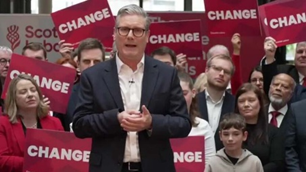
Here are two pictures of Starmer surrounded by Labour’s ‘Change’ posters in recent days – one from the Guardian taken in England, and one from Sky News taken in Scotland.


Do they think no-one will notice?

Friday, 24 May 2024

Climbing on to a sinking ship


Like many idioms and sayings, the old adage about rats and sinking ships has an underlying truth to it. Because rats, in the good old days at least, tended to live in the lowest part of ships, they were often the first to notice an ingress of water and reacted by running upwards. They are, apparently, accomplished swimmers but stand a better chance of surviving in the open sea than in the bilge of a boat en route to the bottom, although whether they have the mental capacity to assess their choices that carefully before running from the encroaching wet stuff is less certain.

Unsurprisingly, the Conservative ship – a sinking vessel if ever there was one – is currently experiencing a rash of sudden departures as well, as the crew eye the direction that their ship is taking under current leadership. Today, they’ve been joined by John Redwood, who entirely coincidentally was once compared to a rat sandwich by Ieuan Wyn Jones, although some have suggested that he’s heading for a different universe rather than a watery grave. He’s long been on a different planet certainly. What is rather less expected is the way in which Sunak’s party is actively welcoming other rats back on board, so that they can go down as members of the crew rather than outcasts and renegades. It’s probably the nearest thing UK politics has to the presidential pardons which some US leaders issue to their mates before leaving office. It’s the sort of thing which only a PM on his political deathbed would consider. He has little reason not to do so, given that the possibility of salvaging anything of his political reputation took to the lifeboat in despair a long time ago.

Thursday, 23 May 2024

Analysing the costs and benefits


One of the most misremembered political events of the past was the way in which Harold Wilson called the 1966 election just after England won the World Cup and swept to victory on the back of the feel-good factor which resulted from the win. It’s utter nonsense, of course – the world cup final was on 30th July, 17 weeks after the election on 31st March. Yet many people still remember, albeit not always fondly, the football effect on Labour’s victory. But if we really want to see the potential impact of a football game on an election, we need to look at 1970, when England were knocked out in the quarter finals just four days before the election, and a generally expected Labour win became an unexpected Tory win.

Whether Sunak has calculated the impact of the Euros on his party’s chances is an unanswered question. The group stages finish a week before the election and the first knock-out stage ends just two days before polling day. Historically and statistically, it’s likely that England will make it through the group stage, so he might be making a safe-ish bet up to that point; but the possibility of an England defeat in a knockout round just days before an election looms large. The more hyped the possibility of winning, the bigger the likelihood of failure – another lesson from sporting history. (He will almost certainly not even have considered the progress of Scotland’s team in the same event; the election will, as is always the case, be lost or won in England.) Following the inexplicable urge felt by senior male politicians (I’ve never understood why they feel such an urge, but it does seem to be a very gender-specific infection) to claim to support a football team, Sunak has opted for being a Southampton supporter, although I’m sure that I’m not the only one who’s a little dubious about the claim, and indeed about any claim he makes to be interested in, or to follow, football.

Whether, or to what extent, a football result really affects the outcome of a General Election is a moot point; whilst it’s hard to believe that millions of people are just waiting for the final whistle before deciding how to vote, it’s entirely believable that a general feel-good factor will benefit incumbents – just as a feel-bad factor will benefit the opposition. I did once read a book on politics which described voting as an essentially irrational act: voting according to the outcome of a football game seems to fit the description rather well. Sunak, on the other hand, seems to genuinely believe that the electorate will carefully weigh up the manifestos of the parties and use a spreadsheet to arrive at an assessment of which is the most financially-rewarding for them personally, and then cast their vote accordingly. Even if his belief in his own competence and ability to deliver were justified (and it’s not a belief which stands up to much objective analysis), the assumption that voters would then:

(a) conclude they will be better off under the Tories, and

(b) vote entirely selfishly on the basis of that cost-benefit analysis

underlines his inexperience in practical politics, and the extent of his detachment from the way people ‘feel’ about the way things are going in general. I’ve knocked on tens of thousands of doors in my time, but it only took me a very small proportion of that number to realise that voting behaviour is far more complex – not to say inexplicable, or even inscrutable – than that.

Still, it gets him off several rather vicious-looking hooks which have been dangling in front of him. He’ll no longer have to find ways of sending someone, anyone, to Rwanda against their will, just as one example. He'll delight the tobacco lobby by dropping his bill to ban smoking for anyone currently under 15. He can stop justifying the increase in NHS waiting lists, the levels of immigration, and the cost of living pressures on families - those all become someone else's problem. And on the fifth of July, he’ll be free to announce that he’s standing down and going off to California to polish his family fortune without waiting to be pushed out. In any spreadsheet setting out the costs and benefits to Rishi Sunak personally of calling an election now, the result looks a lot more favourable than many have been assuming. It just doesn’t include anything remotely political.

Friday, 5 April 2024

The pleasure is likely to be short-lived


One of the many things on which government and opposition are agreed (effectively confirmed in a speech by the Shadow Chancellor a few weeks ago) is that the ‘solution’ to the UK’s problems revolves around economic growth. Rather than debate whether the current pie is fairly distributed, the answer, they say, is simply to bake a bigger pie.

The first and most obvious question is whether economic growth is really as desirable as this approach suggests. Whilst the abstract numbers might suggest so at a macro level, if current levels of economic activity are making unsustainable use of resources then more of the same simply means that we will run out sooner. Whilst it is possible to imagine types of economic growth which are not resource-dependant, that is a much more nuanced objective; and that nuance seems to be missing from both Labour and Tory analyses.

The second question it raises is how to ensure that the extra pie doesn’t simply accumulate in the hands of those who already have the biggest slices. This has, after all, been the default outcome of economic growth in recent decades, leading to increased levels of inequality. Without taking specific actions to control the way the pie is allocated, it will be the default effect of future growth as well. It’s another aspect which neither party seems to be willing to address.

But bigger and more important than either of those questions is the issue of how that growth can be ensured. And here we come to another aspect of shared ideology – both parties share an absolute faith that the answer lies in reducing taxes and regulation, especially on businesses. Empirical evidence for this proposition is 'limited' (and that's being charitable), but one of the features of blind faith is that it doesn’t need any evidence. They don’t usually spell out what they mean in any detail, preferring to hide behind neutral-sounding jargon such as ‘supply-side reforms’, but what they mean is tax cuts and less regulation. And the regulations which they usually want to cut are things like health and safety and environmental protection – cuts which, if people are asked more directly about, they are more likely to resist. And, for all the apparent logic behind the idea of helping businesses to retain more of their profit so that they can invest in new capacity, the economic reality is that most new investment is funded by borrowing, not out of profit. Yet the parties have no other plan.

There have been a number of polls recently, one of which suggested that the Tories could be reduced to fewer than 100 seats. Whilst my first reaction was along the lines of, ‘come on people, we can get them closer to zero than that’, a more considered response was ‘so what?’. Whether the balance is 350 Labour to 250 Tories, or 450 Labour to 150 Tories, or even 600 Labour to 0 Tories, we would still have 600 MPs committed to the faith-based policy of reducing tax and cutting regulation. We would also still have 600 committed to a form of austerity, and 600 committed to the folly of Trident replacement. Even if all of the other 50 MPs were to take a different view (and that’s unlikely: Sinn Fein refuse to take their seats and the DUP are even more of a faith-based cult than the Tories; and then we have the Lib Dems – who knows where they stand on anything? – leaving only the SNP, Plaid and the Greens with any possibility of taking a different view), the chances of a significant policy reset are vanishingly small. A Labour government might be more competent – they could hardly be less so – but the idea that competent austerity based on blind faith is better than incompetent austerity based on blind faith is not exactly the killer argument as which some seem to see it.

The undoubted pleasure which many will feel at the forthcoming near wipeout for the Tories is likely to be rather short-lived.

Monday, 24 October 2022

Out by Christmas?


It seems increasingly likely that Rishi Sunak will become the UK’s next soon-to-be-ex-PM by the end of the day, either because Mordaunt fails to reach the threshold of 100 nominees or else because an indicative vote amongst MPs shows her so far behind Sunak that she succumbs to the inevitable pressure to withdraw rather than potentially allow the Tory Party’s membership to override the views of MPs again. Either way, it will be presented as the start of an outbreak of party unity. That will, though, just be another pretence.

Johnson claimed that he had the numbers to enter the race. That’s almost certainly a lie, according to many commentators, and there is indeed no reason to suppose that his long-standing divorce from truthfulness has in any way been impacted by a six week absence from high office. His inability to face the fact that he simply doesn’t have the support means that he has been forced to alight on some other reason for withdrawing from a race that he had never formally entered, and he came up with the line that he could not unite his warring party. It’s one of those strange statements which treads the boundary between truth and falsehood: whilst it’s certainly true that he cannot unite his party, the idea that he believes that he can’t, or that this is his real reason for not standing, is for the birds, such is his unshakeable belief in his own talents.

The accidental truth, though, that Boris Johnson cannot unite the Tory Party conceals a much greater truth of more general application: nobody can. And however much they try to present the forthcoming coronation of Sunak as a mark of unity, Sunak can’t do it either. The party is hopelessly divided into factions whose only mutual factor is an intense loathing of each other. And whilst part of that is about policy issues – such as levels of taxation and public expenditure – an awful lot of it is deeply personal. Johnsonites won’t forgive Sunak for, as they see it, knifing their man, and the path being followed by the current Chancellor (who may or may not still be in office tomorrow) is utterly unacceptable to the free market ultras, for whom cutting taxes and slashing public expenditure is an article of faith. Whether the policy of the new government can somehow be made attractive to ordinary voters is little more than a side-show compared to the difficulties of getting it through a jittery bunch of Tory MPs fearful above all for their own futures.

The electoral system in use in the UK forces any party serious about winning a majority to become something of a broad church. Whilst that’s traditionally been more obvious in the case of Labour, it’s always been true about the Tories as well. Unity around the desire for power and for the trappings of office has long enabled the Tories to conceal the fact better, but differing views about the relationship between these offshore islands and the mainland of Europe have been bubbling away internally since the days of Thatcher, and the ‘victory’ which Brexit represents for one Tory faction has been the catalyst for a descent into an all-out ideological war which has become highly personal in the process. There will be no bridging of the void this side of a general election, and it’s entirely possible that they may burn through a few more PMs before then. Why Sunak – or anyone else except Johnson with his grossly inflated sense of self – would actually want the job in the circumstances is beyond my understanding.

A proportional system would allow the major parties to fragment into more cohesive and united individual parties, and force negotiations between those parties about agreed programmes for government. Sometimes, those agreements would break down, just as the internal agreement within the Tory Party has broken down now. The difference is that such a breakdown between parties would create the opportunity and the mechanism for those differences to be judged by the electorate if no alternative could be formally negotiated. The current system tries to hide the differences and pretend that there is a coherent government in place, on the basis of an artificially high ‘majority’ in an election 3 years ago. It’s a sham, and the only remaining question is whether any pretend peace between the factions can hold until Christmas. It looks unlikely, although if Sunak sends MPs home for Christmas early (around the middle of November, perhaps), he might improve his prospects. Johnson is probably calculating that he’ll get another chance sooner than many imagine.

Friday, 8 July 2022

Vote Tory to rejoin Single Market?


Labour have said that, if the Tories do not remove Boris Johnson from Downing Street in the next few days, they will table a formal motion of no confidence in the House of Commons. It’s unlikely to be passed, and I doubt that Labour would really want it to be either. They’d much prefer the spectacle of a whole host of Tory MPs who’ve openly declared their lack of confidence in the PM lining up to cast their votes expressing their complete confidence in his government. But unlikely is not the same as impossible; there is just a possibility that it might succeed and lead to an immediate general election.

There is another unlikely but not impossible event on the horizon as well. It’s always seemed to me that the ‘investigation’ into Starmer’s bottle of beer was a rather pathetic attempt by the Tories to try and create some sort of false equivalence with Johnson’s incessant disregard for the rules which he himself introduced, and that the police would eventually conclude that no rules had been broken. I could be wrong, though – whilst the force doing the investigation isn’t the badly-flawed Met, it is still possible that Mr Plod will find an interpretation of the rules under which they can issue fines to ‘Keith’ and his deputy, both of whom have already committed to resigning if that were to happen. That could leave us holding a general election in which both the main parties were under caretaker management, and neither could tell us who would be PM if they won. It’s a fascinating prospect, and the fact that it is not impossible underlines, yet again, just how badly broken the UK’s political system is.

Leaving aside my personal fantasy of watching two leaderless parties struggle their way through the contest, in the real world the likelier scenario is that we face an election next Spring (whilst the UK system does not necessitate a new PM calling an election, there is a general expectation that he or she should do so). The Tory Party will be under a new leader who will be going head to head with Keith. Given the need for the new Tory PM to put some distance between him or herself and the disaster that went before, there is one obvious policy choice which he or she could make which might actually transform the chances of success, and that is to promise to negotiate membership of the EU single market (SM) and customs union (CU). Membership would, at a stroke, resolve the problem of the NI Protocol and help to reduce shortages of some products. It would also boost economic growth and have an impact on inflation. Most businesses would welcome the move – the Tory Party might again come to be regarded as the party of business rather than the party of F*** Business (© Boris Johnson, 2018). Best of all (from the Tories’ perspective) it would completely wrongfoot Labour, who, after Starmer’s commitment last week not to seek membership of the SM or CU, would find itself arguing that it alone could make the impossible work, by following a plan remarkably similar to that of Johnson but without the petulance. Remainers might find that, despite all that has happened, the Tory Party is more in line with their views than Labour.

Could it happen? Certainly there are those in the Tory Party, such as Tobias Ellwood, who are arguing in favour of such a move. Dan Hannan (then an MEP), one of the earliest prominent Brexiteers, said in 2015 that “Absolutely nobody is talking about threatening our place in the Single Market”, and has said this year that "Staying in the single market, or large parts of it, would have saved us a lot of trouble". Despite what many Brexiteers currently believe, there was never anything inconsistent between leaving the EU and remaining in the SM and CU; the link between the two only became ‘necessary’ after the vote had been held. Such views do not currently appear to be mainstream in the Conservative Party, although it’s unclear whether that’s because people don’t hold them or are simply parroting the (current) official line. But neither are they entirely eccentric, particularly among business donors, whose influence (in normal, non-Johnsonian times) should not be underestimated. The question is, perhaps, less about whether the party could change its views on such a major issue (it can, and frequently does, usually at the whim of the leader), and more about whether a candidate talking about making such a change could ever make it into the final two when MPs vote for the next leader. If it were to happen, it’s much more likely to be the result of a candidate who says the opposite to get elected as leader and then changes his or her mind after taking up residence in Downing Street in the light of getting a ‘full briefing’ on the economic realities. They call it ‘pragmatism’ (although others might see it as a lack of any underlying principle), something which has rarely been in short supply under the Tories under all leaders except the current one. And saying one thing to get elected and then doing the opposite is not exactly an unusual proposition for Tories. Even without Boris.